 InsightsContact LVT
What is LDM – and why does it matter for your freight rate?
Loading metres (LDM) often decide the price of pallets and part loads. A simple explanation, worked examples and the most common pitfalls.
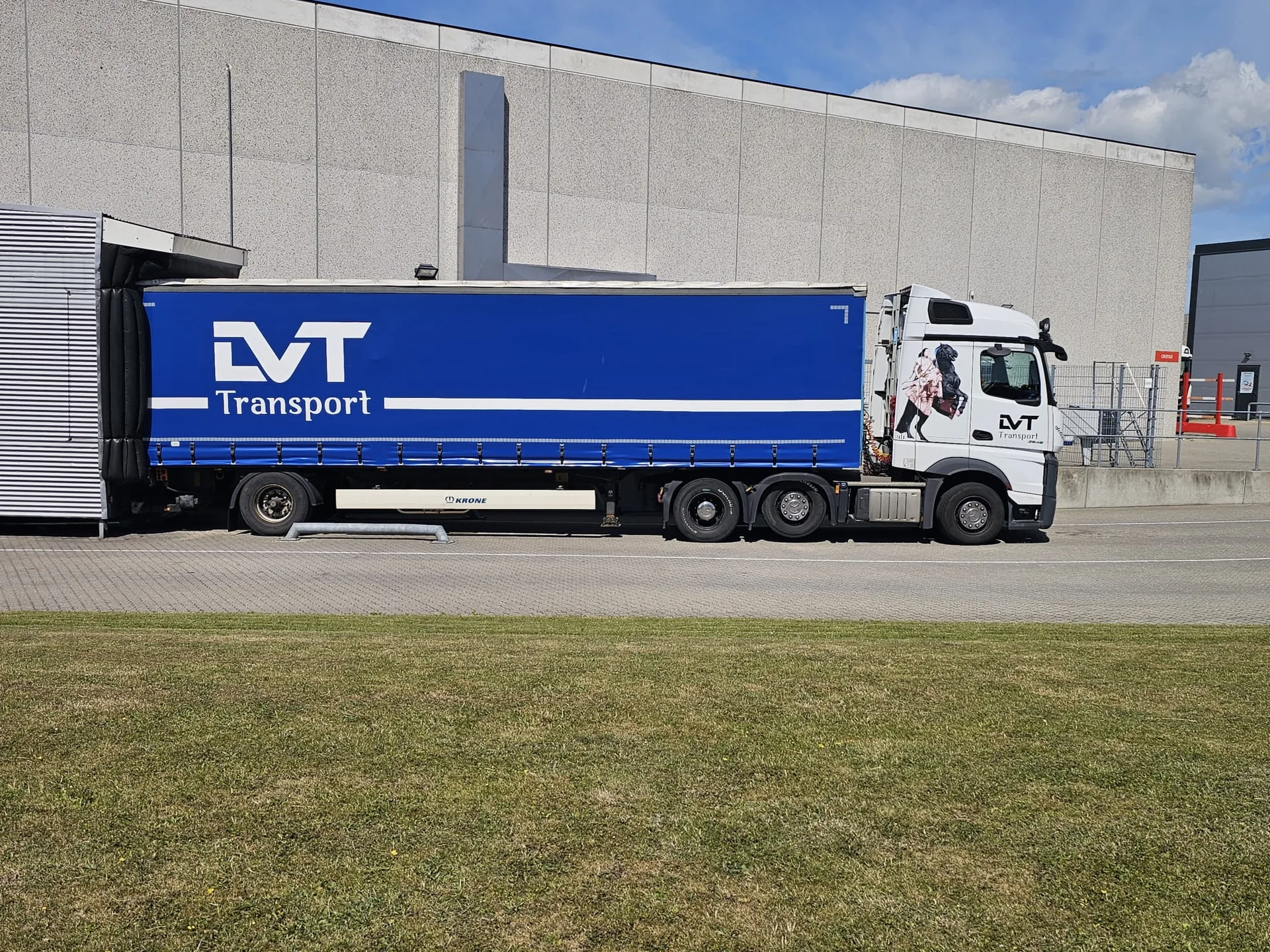
When you ask for a price on pallets or part loads, the haulier almost always asks for dimensions – not just weight. The reason is the loading metre, or LDM.
What is a loading metre?
One loading metre is one metre of the truck's load floor across its full width. A standard semi-trailer is about 2.4 metres wide and 13.6 metres long – in other words 13.6 LDM.
Goods take up floor space no matter how light they are. That is why the price is often based on the space the goods occupy, not only on weight.
How to calculate LDM
The formula is simple:
LDM = length (m) × width (m) ÷ 2.4
Examples:
- 1 EUR pallet (1.2 × 0.8 m) = 0.4 LDM
- 1 industrial pallet (1.2 × 1.0 m) = 0.5 LDM
- A full semi-trailer typically takes 33 EUR pallets on the floor
If the goods can be stacked, two pallets can share the same floor space. In principle that halves the loading metres – but only if the goods can actually take the load.
Chargeable weight: turning LDM into kilos
Most rate sheets use a conversion factor so that space can be compared with weight. The factor varies between carriers and agreements – often somewhere around 1,500 to 2,000 kg per LDM.
The price is then based on the highest of:
- the actual weight,
- LDM converted to kg,
- possibly volume (m³) converted to kg.
Example: 4 EUR pallets of 300 kg, not stackable. The actual weight is 1,200 kg. The space is 1.6 LDM. With a factor of 1,850 kg per LDM this equals 2,960 kg – and that is the figure the price is based on.
Three pitfalls
- "Stackable" when it isn't. If the goods cannot take a pallet on top, say so. Otherwise an adjustment may follow.
- Overhang. Goods sticking out over the pallet count in the dimensions.
- Height. Tall pallets cannot always be stacked, even if the goods could take it.
In short
State the dimensions per pallet, the weight and whether the goods can be stacked. Then the carrier can give you a price that holds – and you avoid surprises on the invoice.
See also LDM in the glossary.